I’ve been working in commercial curtain track sales for more than ten years, and there is one question I often hear:
Do project-based curtain tracks really need to be high quality?
My answer is simple: Yes. I think most people would agree.
Of course, “high quality” does not necessarily mean choosing the most expensive track or adding every possible feature. For project applications, what really matters is a curtain track system that is stable, smooth, quiet, cost-effective, and suitable for long-term use.
Commercial projects are different from installing one curtain track at home. If something goes wrong at home, you might be able to climb up and fix it yourself. But in a hotel, office building, apartment complex, school, or other large project, if dozens or hundreds of tracks have problems, the maintenance team may feel like they are starting a “world tour.”
And that can become very expensive.
First, What Is a Commercial Curtain Track?
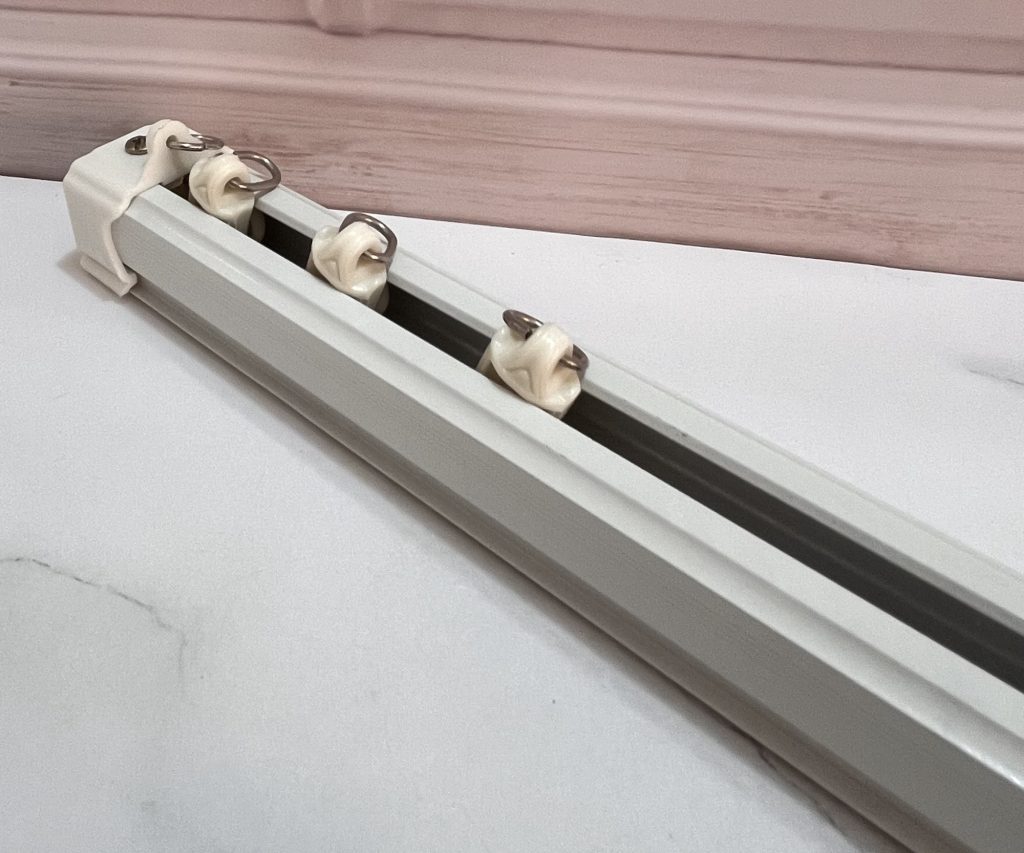
Simply put, commercial curtain tracks are aluminum curtain track systems used in hotels, apartments, office buildings, commercial spaces, schools, hospitals, and other projects where curtains need to be installed in larger quantities.
The biggest difference between commercial and residential curtain tracks is not just appearance. It is the quantity, frequency of use, installation requirements, and long-term maintenance needs.
Project applications usually require consistent specifications and installation methods. At the same time, factors such as track length, connection methods, load capacity, bending, curtain weight, and long-term stability all need to be considered.
There is also another important factor: cost efficiency.
So, a commercial curtain track is not simply a regular curtain track made longer. It is designed around quantity, consistency, practical performance, and project cost.
Why Do Commercial Curtain Tracks Often Have Quantity Requirements?
The most obvious feature of a commercial project is the quantity.
A regular home may only need a few tracks, while a hotel project could require dozens or even hundreds.
Once the quantity increases, buyers are not only looking at the price of one track. They also need to consider:
- Whether the specifications are consistent from batch to batch
- Whether the track lengths are consistent
- Whether all accessories are included
- Whether the connections operate smoothly
- Whether the installation method is consistent
- Whether replacement or additional orders will be convenient later
As a project sales manager, I prefer to discuss these details before production begins rather than having the customer discover halfway through installation:
“Why is this batch different from the previous one?”
For project procurement, the biggest concern is often not paying a little more. It is inconsistent batches and difficult maintenance later.
What Quality Requirements Should Aluminum Commercial Curtain Tracks Meet?
The first thing to consider is stability.
The aluminum track profile, wall thickness, structural design, surface finish, rollers, and other accessories all need to work together.
After installation, the track should not simply be able to “hold the curtain.” It should also allow the curtain to open and close smoothly during daily use.
Longer tracks require even more attention to connection points and mounting locations.
For example, our B100 uses a standard 2 cm × 2 cm profile, making it suitable for larger-scale installations. Our C100 version, which is designed with a noise-reduction feature, is approximately 2.5 cm high × 3 cm wide, making it suitable for projects where quieter operation is important.
If the track itself is good but the connectors, brackets, or rollers do not match properly, the overall performance can still suffer.
That is why, when we quote for a project, we normally do not look at the price of the track alone. We consider the track, rollers, brackets, connectors, installation method, and overall system together.
This gives us a better way to evaluate the project as a whole.
How Should You Choose a Commercial Curtain Track?
There is no single track that is suitable for every project. Usually, the selection needs to be considered from several different aspects.
For example, regular curtains, heavy blackout curtains, hotel curtains, and motorized curtains may require different track systems.
Window size, curtain weight, installation location, whether curved tracks are required, and whether the track needs to be recessed or concealed can all affect the final choice.
Therefore, I usually recommend that project customers provide a few basic details:
Curtain type + approximate curtain weight + track length + installation method + project quantity.
If possible, it is even better to provide site photos or design drawings. This helps us verify the actual requirements more accurately.
That way, the factory can recommend a more suitable track instead of simply seeing the words “commercial project” and sending a quotation.
The Smooth-Running System Is Just as Important as the Track Quality
After a curtain track is installed, the thing customers notice every day is very simple:
Does it move smoothly?
The smooth-running system of a commercial curtain track usually involves the internal track structure, rollers or carriers, and how these components work together.
If the inside of the track is not smooth enough, or if the rollers do not match the track properly, the system may feel fine when first installed but develop more resistance after repeated use.
That is why I recommend testing samples before choosing a track for a project.
A sample test is often the best way to understand the product.
Pull it once, pull it ten times, and then test it continuously. The feeling can be different.
A commercial product should not only perform well on a sample table. It also needs to be considered from the perspective of long-term use after installation at the actual project site.
Quiet Design Should Not Be Just a Marketing Term
“Quiet operation” is another detail that is easy to overlook.
In hotels, bedrooms, apartments, meeting rooms, and other quiet spaces, the sound of curtains moving can become much more noticeable, especially at night.
The internal track structure, roller material, contact points, and track surface can all affect the actual operating noise.
Some tracks use quiet rollers, noise-reduction strips, or optimized internal structures to help reduce operating noise.
Of course, the actual quietness should always be evaluated based on real installation and use.
As a project sales manager, I usually tell customers:
Don’t just look at the words “quiet track.” Take a sample and pull it yourself.
With curtain tracks, sometimes pulling the sample once tells you more than reading ten pages of product information.
In the End, a Commercial Curtain Track Does Not Have to Be the Most Expensive
After working on project applications for many years, I have come to believe that the most important thing is not choosing the track with the highest configuration.
It is choosing a track that fits the project.
If the project quantity is large, consider batch consistency.
If the curtains are heavy, consider load capacity and smooth operation.
If the track is long, consider connections and installation.
If it is a hotel or residential project, pay attention to operating noise.
If maintenance will be difficult later, spend more time choosing the right product at the beginning.
So, do commercial curtain tracks need to be high quality?
My view is simple:
They do not necessarily need to be the most expensive, but saving a little on the purchase price should not create problems for the installation and after-sales teams later.
Because the real cost of a project is not just the purchase price.
Saving a little on one curtain track may not seem like much. But if dozens or hundreds of tracks later require adjustment, repair, or replacement, everyone quickly discovers one thing:
The most expensive part may not be the track. It may be the rework.
For project procurement, what matters more is the overall stability and reliability of the project.