Every home has windows, and opening and closing curtains is part of everyday life. We get used to it, but after several years of use, if you pay close attention, you may notice a difference. Curtains that once pulled smoothly may become harder to pull. Sometimes you hear noticeable friction noise, and the heavier the curtains, the more effort it takes to move them. In some cases, the rollers may even get stuck. At that point, your first thought is probably that the rollers need to be replaced.
So what causes these problems? Can they be reduced?
When people encounter this situation, many immediately blame the curtain track. In reality, the quality of the track is only part of the story. The roller structure also plays an important role in how smoothly curtains operate. As curtain track rollers continue to evolve, standard bearing rollers are attracting more and more attention for their potential to improve the everyday experience.
Such a small thing—what exactly is a bearing roller? How is it different from an ordinary roller?
Professionally speaking, a bearing roller is a curtain track roller that uses an internal ball-bearing structure. Ordinary rollers generally rely on contact between the wheel body and its axle to operate, while bearing rollers use rolling balls inside the bearing to reduce friction during movement. This helps reduce operating resistance and noise.
This difference in structure directly affects the smooth, quiet experience of opening and closing curtains.
You may not notice it when the rollers are new, but during long-term use, ordinary rollers may develop increased friction or changes in the clearance between the wheel body and axle. This leads to rough movement and increased noise. A well-designed, properly manufactured bearing roller can rotate more smoothly as it moves along the track and reduce resistance. A gentle pull is all it takes to open or close the curtain.
This is particularly important for large windows, floor-to-ceiling windows, and installations with heavy curtains. When the overall curtain weight increases, roller performance becomes even more noticeable in everyday use—some curtains require a lot of effort to pull, while others glide open with a simple tug. The difference is quite obvious.
When opening and closing curtains regularly, the last thing you want is to struggle with them every day. At night, the noticeable noise from moving curtains can also disturb the peace of your home.
That is where the advantages of bearing rollers come in. Bearing rollers use an internal ball-bearing structure to reduce rotational friction. When correctly matched with the track and properly installed, they generally allow curtains to move more easily and smoothly.
Reduced friction also helps lower operating noise, creating a quieter and more comfortable indoor environment.
As for price, why are bearing rollers more expensive than ordinary rollers? The main reasons lie in their internal structure and manufacturing requirements.
Ordinary rollers have a relatively simple structure and simple process, so they cost less to make, while bearing rollers require internal bearing components and greater attention to machining accuracy and assembly quality. Costs naturally rise. Differences in materials, bearing quality, and manufacturing processes also affect the final cost of bearing rollers.
As a result, bearing rollers generally cost more than ordinary rollers.
For friends in the curtain industry, the purchase price should not be the only consideration. For heavy curtains or installations that are opened and closed frequently, smooth operation, load-bearing performance, and long-term durability are all important factors. This is exactly where the advantages of bearing rollers become particularly noticeable. For curtain retailers, project contractors, and wholesale buyers, selecting the right roller for each customer’s needs can help reduce problems caused by poor movement and excessive friction.
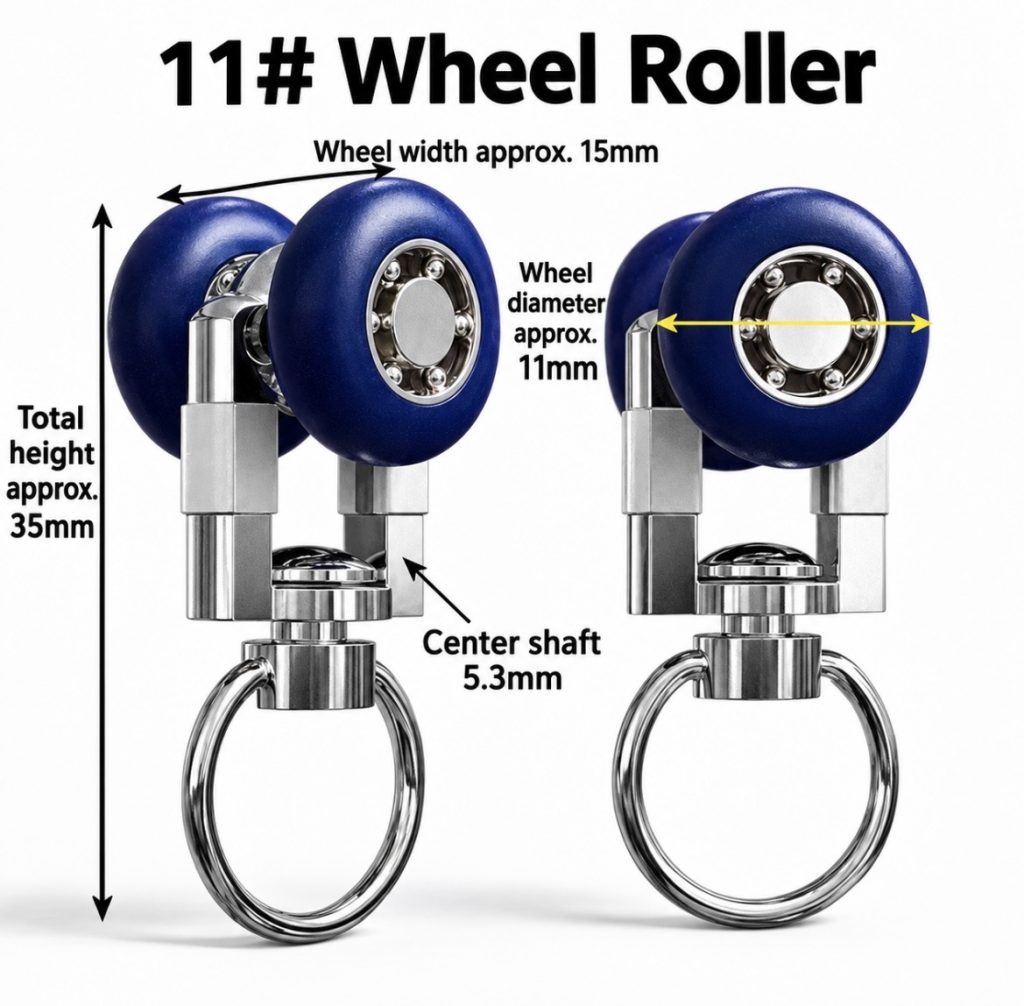
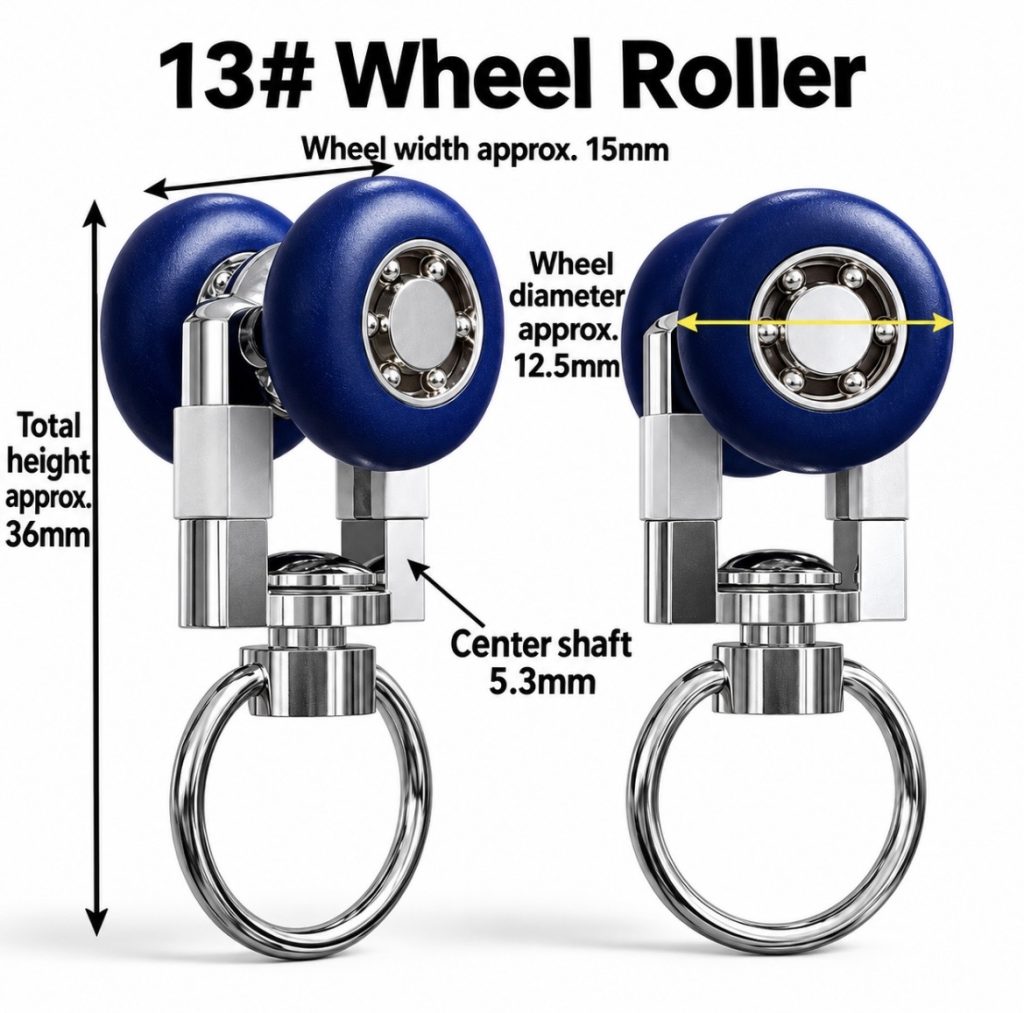
There are many types of tracks on the market—can bearing rollers match them? Here are three sizes to fit different curtain tracks.
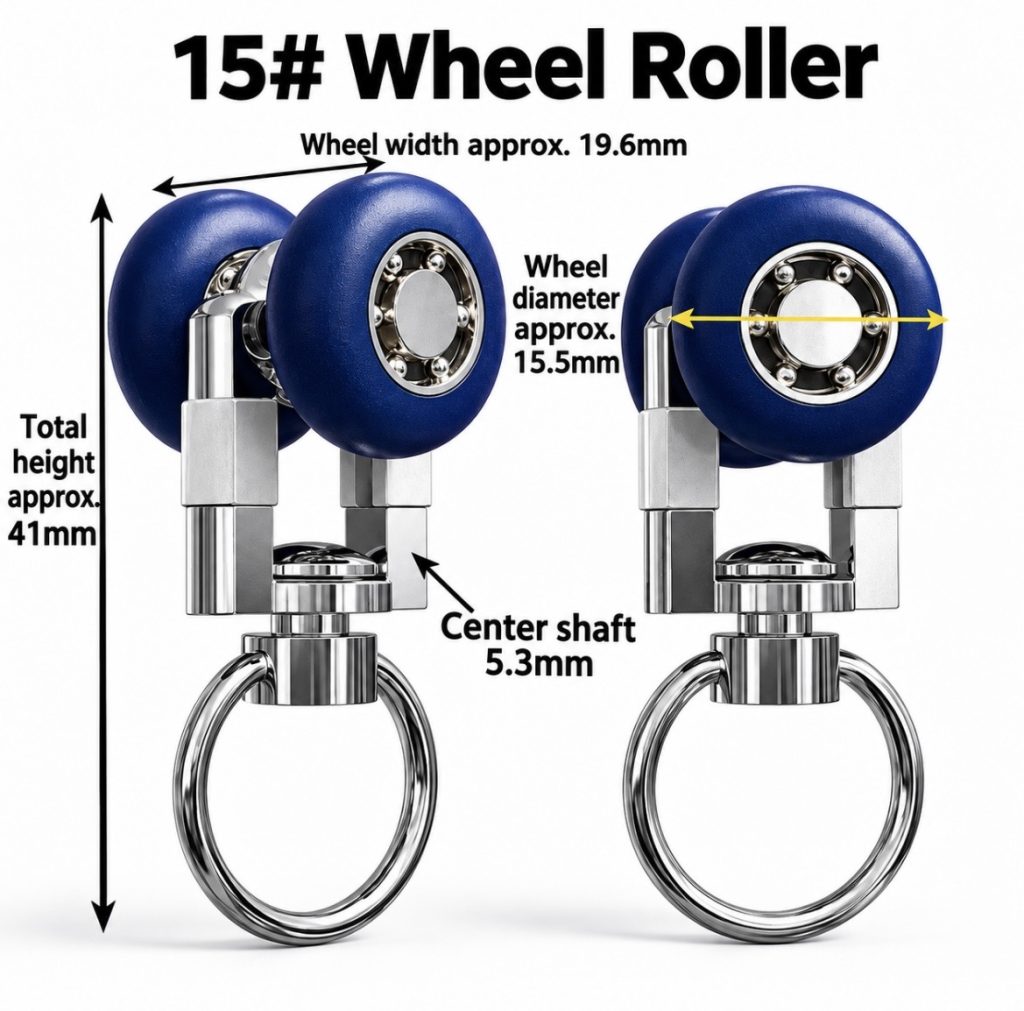
Friends worry that bearing rollers come in only one size. In fact, we offer three sizes: No. 11, No. 13, and No. 15, designed to match different curtain track dimensions.
When choosing a roller, it is important to check more than just the wheel diameter. The internal width of the track and the overall height and structure of the roller must also be compatible.
Even a high-quality roller may move poorly or be difficult to install if its dimensions do not match the track.
If you are replacing existing rollers, we recommend measuring the internal width and height of the track channel before selecting the appropriate size.
Wide curtains, heavy blackout curtains, and frequently used window treatments often benefit from bearing roller products, delivering noticeably different results. When properly designed and manufactured, bearing rollers can deliver better operating performance in a compatible track system and may support greater loads and longer service life.
Some friends may worry that replacing rollers means replacing everything. Actually, that is not the case. Upgrading a curtain track system does not always mean replacing the entire system. Sometimes simply replacing the rollers can achieve very good results.
If you are looking for curtain track rollers that offer smoother movement, quieter operation, and better load-bearing performance, bearing rollers are worth considering.
We are a wholesale supplier of window treatment curtain tracks and accessories.